
Electrifying Without a Service Upgrade: Is 100 Amps Enough?
By the MC2 Electric team · Last reviewed October 14, 2026 · 4 min read
- The problem: service upgrades through PG&E can be quick, but complex ones have taken 5 to 14 months and cost from a few thousand to tens of thousands of dollars.
- The opportunity: the electrical code lets you measure real demand (NEC 220.87) and count load management (220.70, 625.42) instead of assuming every appliance runs at once.
- The toolkit: right-sized heat pumps, 120V water heaters, EV load management, circuit sharing and smart panels.
- The result: many 100-amp San Francisco homes can electrify without touching the service. Some still need an upgrade, and knowing which early saves months.
The usual advice for electrification is to upgrade to 200 amps first. In San Francisco that advice can cost a lot of time. Meters are often in tight spaces, service drops cross shared walls, and every change to the service runs through PG&E’s schedule. The good news is that the code gives electricians better tools than a blanket upgrade. Here’s how we approach it.
Why the service upgrade is the bottleneck
A study for PG&E and SDG&E found that the service upgrade process often runs beyond six to nine months for complex cases. PG&E has told reporters that about half of upgrades are simple, while the rest take five months or more. Costs above PG&E’s standard allowance ranged from a few hundred to more than $16,000 in that study.
Not every home can avoid an upgrade. But if one isn’t needed, skipping it removes the slowest, least predictable step from your project.
Measure, don't guess
A standard load calculation assumes worst-case demand on paper. NEC 220.87 allows a different approach for existing services. Use your actual maximum demand, either from a year of utility data or from at least 30 days of recording on site. Then add 125% of that peak to the new loads. If the total fits the service rating, no upgrade is required.
- Utility data: PG&E provides interval data through your account. Ask your electrician whether the inspector will accept hourly residential data or wants an on-site recording.
- Recording: a 30-day logger on the service conductors captures real peaks, ideally in a cold month when heating loads are high.
- Result: older homes on 100 amps frequently peak at a fraction of that, which leaves real room for new loads.

The toolkit: fitting more on the same service
| Tool | How it helps | Code basis |
|---|---|---|
| 120V heat pump water heater | Uses a standard circuit instead of a 30A, 240V circuit | Appliance listing |
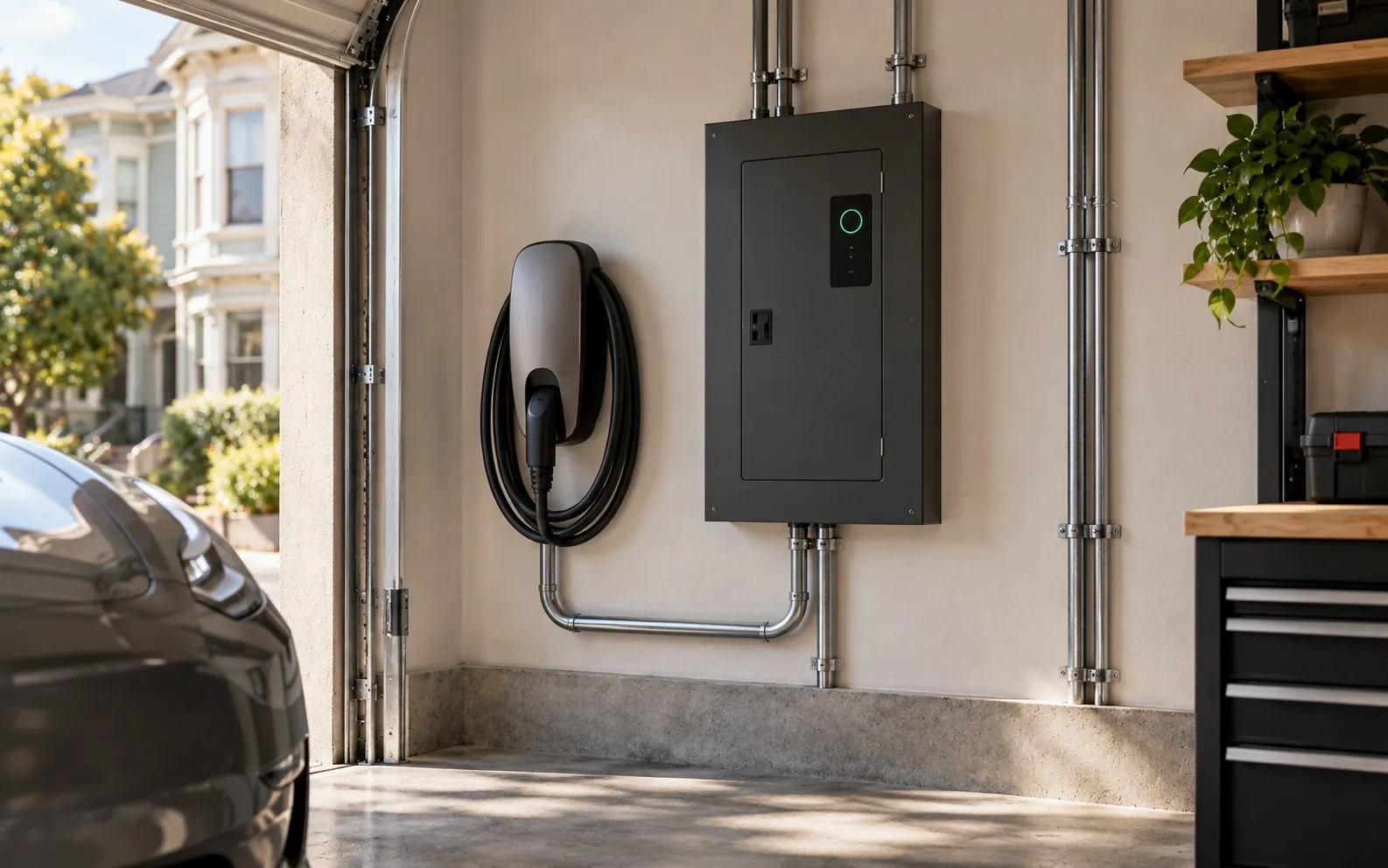
| EV charger load management | Charger power is set or controlled, so the calculation uses the limited value | NEC 625.42 |
| Energy management system | A listed controller caps total current, and its setpoint is used in the load calculation | NEC 220.70, 750.30 |
| Circuit sharing or pausing device | Two large loads, such as a dryer and an EV charger, share one circuit and never run together | Listed equipment |
| Smart panel | Monitors and sheds loads automatically, and adds visibility | Listed equipment, often with 220.70 |
| Right-sized heat pump | Sizing to the real heat load rather than the old furnace avoids oversizing | Manual J sizing |
Redwood Energy’s widely used Pocket Guide to All-Electric Retrofits shows how a typical single-family home can fully electrify on 100 amps with this kind of planning.
The cheapest amp is the one you never have to buy from PG&E. Measuring first and managing loads gets most homes there.
Typical loads to plan around
| Appliance | Typical circuit | Lower-impact option |
|---|---|---|
| Level 2 EV charger | 40A to 60A, 240V | Set to 16A to 24A, or managed. Most daily driving needs far less. |
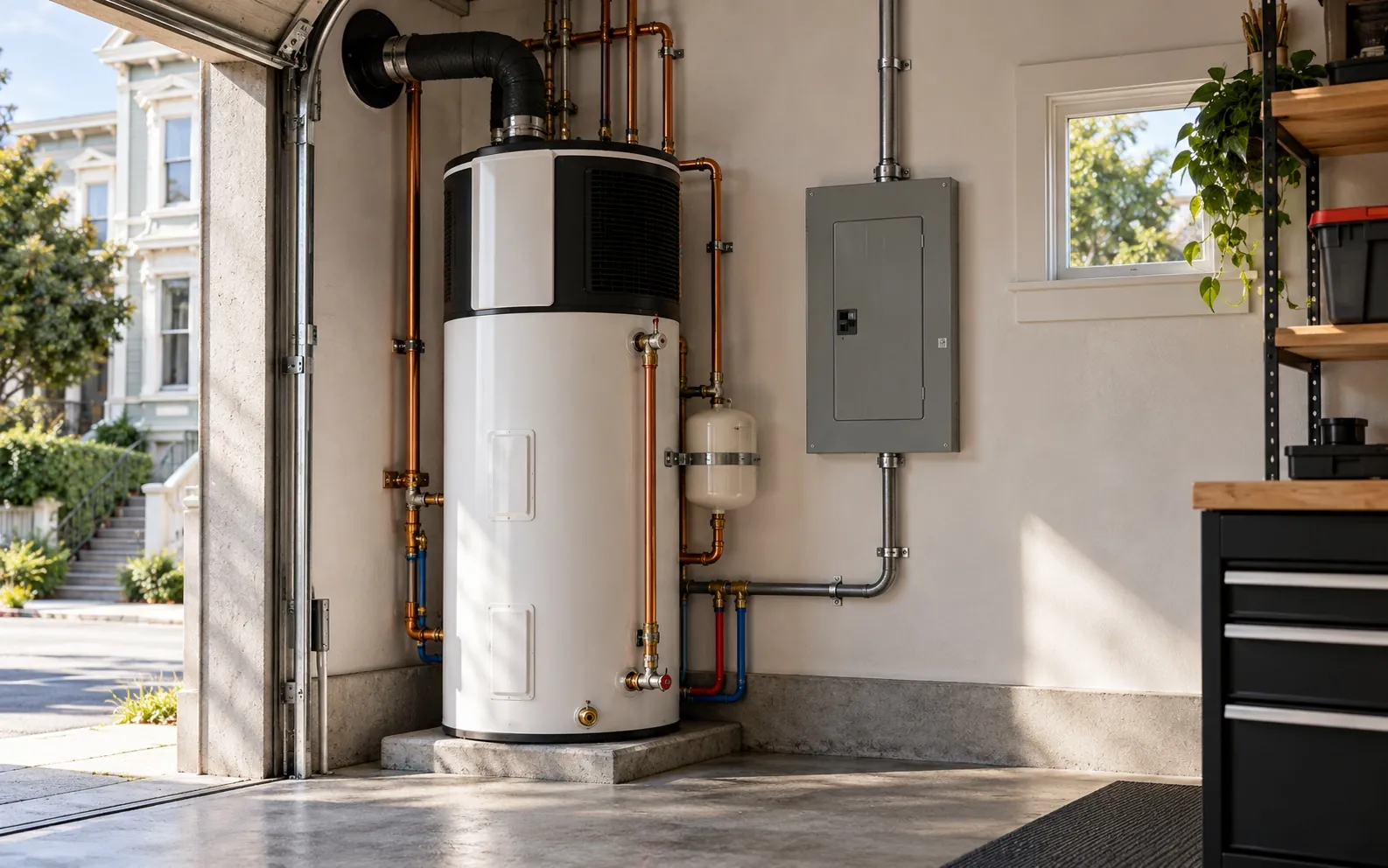
| Heat pump water heater | 30A, 240V | 120V plug-in or dedicated 15A/20A |
| Induction range | 40A to 50A, 240V | Models rated for 30A, or battery-assisted 120V ranges |
| Heat pump dryer | 30A, 240V, or 120V | 120V ventless models |
| Ductless heat pump | 15A to 25A, 240V per outdoor unit | Right-sized single-zone units |
These are typical values only. The nameplate and installation instructions govern each project.
When an upgrade is the right call
- The measured peak plus new loads still exceeds the service rating after load management.
- The panel is obsolete, damaged or a brand with known safety problems, so it needs replacing anyway.
- You are planning a major remodel, ADU or whole-home battery where a larger service is simpler long-term.
- The service entrance or meter is unsafe or non-compliant.
If an upgrade is needed, start the PG&E application early and get a written estimate. Our article on PG&E power timelines covers how to keep it moving, and this guide to battery backup explains how storage affects sizing.
Questions we hear often
Can I add an EV charger and a heat pump on a 100-amp panel?
Often yes. With a measured load study, EV load management and right-sized equipment, many 100-amp homes can add both. A load assessment confirms it for your home.
How does an NEC 220.87 load study work?
It uses your home’s actual maximum demand, from a year of utility data or at least 30 days of on-site recording. Then it adds 125% of that peak to the new loads. If the total is within the service rating, no service upgrade is required.
Are smart panels and circuit sharing devices allowed in San Francisco?
Listed equipment installed under the California Electrical Code is allowed, and the 2023 NEC-based code recognizes energy management systems in load calculations. The installation still needs a permit and inspection.
How long does a PG&E service upgrade take?
Simple upgrades can take weeks. Complex ones that need new transformers or service drops have historically taken five to fourteen months. Apply early and get a written timeline.
What is a 120V heat pump water heater?
A heat pump water heater designed to run on a standard 120-volt circuit, sometimes plugged into an existing receptacle. It avoids a new 240-volt circuit, with somewhat slower recovery than 240-volt models.
Sources and further reading
We checked the facts in this article against these primary sources. Rules, rates and incentives change, so confirm current details before you make a decision.
- PG&E/SDG&E Service Upgrades for Electrification Retrofits Study
- Redwood Energy: Pocket Guide to All-Electric Retrofits of Single-Family Homes
- Lawrence Berkeley National Laboratory: NEC and home electrification
- Mike Holt: 2023 NEC 220.70 energy management
- PG&E Electric Schedule E-AMDS (interval data)
This article is general information for San Francisco readers, not legal, tax or engineering advice for a specific property.