
PG&E’s Base Services Charge: How Your 2026 Bill Changed
By the MC2 Electric team · Last reviewed October 14, 2026 · 4 min read
- New since March 1, 2026: PG&E bills include a fixed Base Services Charge: $6.00, $12.08 or $24.15 per month depending on income tier.
- The trade: per-kWh prices were lowered to offset it. The CPUC estimated about 4.7 cents per kWh for PG&E.
- Who benefits: homes that use more electricity, such as those with EVs, heat pumps or induction cooking. Very low-usage homes may pay slightly more.
- CleanPowerSF customers pay it too. It is part of PG&E’s delivery charges.
If your PG&E bill looked different this spring, it was. A line item that most Californians had never seen before arrived on March 1, 2026, and electricity rates moved several times this year. Here’s what changed, why, and what it means for decisions like adding an EV charger or replacing a gas appliance.
What changed on your bill
California’s 2022 budget legislation (AB 205) told regulators to create an income-graduated fixed charge with at least three tiers. The CPUC adopted it in Decision D.24-05-028 (May 2024), and it was later renamed the Base Services Charge. PG&E’s version started on March 1, 2026.
| Tier | Who qualifies | Monthly charge |
|---|---|---|
| Tier 1 | CARE customers | $6.00 |
| Tier 2 | FERA customers, and deed-restricted affordable housing at or below 80% of area median income | $12.08 |
| Tier 3 | All other residential customers | $24.15 |
The charge is not new revenue for PG&E. It moves fixed grid costs, such as poles, wires and billing, out of the per-kWh price and into a flat monthly amount. To balance it, per-kWh prices came down. Combined with a January 2026 rate decrease, PG&E reports residential prices about 13% lower than in January 2024.
Who pays more, who pays less
The math is simple. You pay the fixed amount, but every kWh costs less. At the CPUC’s estimate of roughly 4.7 cents per kWh, a Tier 3 household breaks even at about 500 kWh per month. Above that, the new structure tends to cost less. Below it, slightly more.
| Example household (illustrative) | Monthly use | Likely effect |
|---|---|---|
| Studio apartment, gas heat and cooking | ~250 kWh | Pays a little more |
| Family flat with gas water heater | ~450 kWh | Roughly neutral |
| Home with EV and heat pump water heater | ~800 kWh | Pays less |
| All-electric home with EV and heat pump heating | 1,000+ kWh | Pays noticeably less |
These are directional examples, not bill estimates. Your rate plan, season and time-of-use pattern matter as much as total usage.
E-ELEC: the plan built for electrified homes
PG&E’s E-ELEC plan is designed for homes with an EV, battery storage or a heat pump for water or space heating. Its old $15 monthly base charge was replaced by the Base Services Charge. Solar customers on the Net Billing Tariff are required to take it.
| E-ELEC (tariff effective Aug 28, 2026) | Peak (4 to 9 PM) | Part-peak | Off-peak |
|---|---|---|---|
| Summer, per kWh | $0.552 | $0.390 | $0.334 |
| Winter, per kWh | $0.321 | $0.299 | $0.285 |
The spread between summer peak and off-peak is about 22 cents per kWh. That rewards anything you can schedule: EV charging overnight, water heating on a timer, the dryer before 4 PM.

Practical moves for San Francisco homes
- Check your tier. If you qualify for CARE or FERA, enrolling lowers both your fixed charge and your per-kWh rate.
- Compare plans with your own data. PG&E’s rate comparison tool uses your actual interval data. Rerun it after adding an EV or heat pump.
- Schedule big loads. Most Level 2 EV chargers and many heat pump water heaters have built-in timers. Use them.
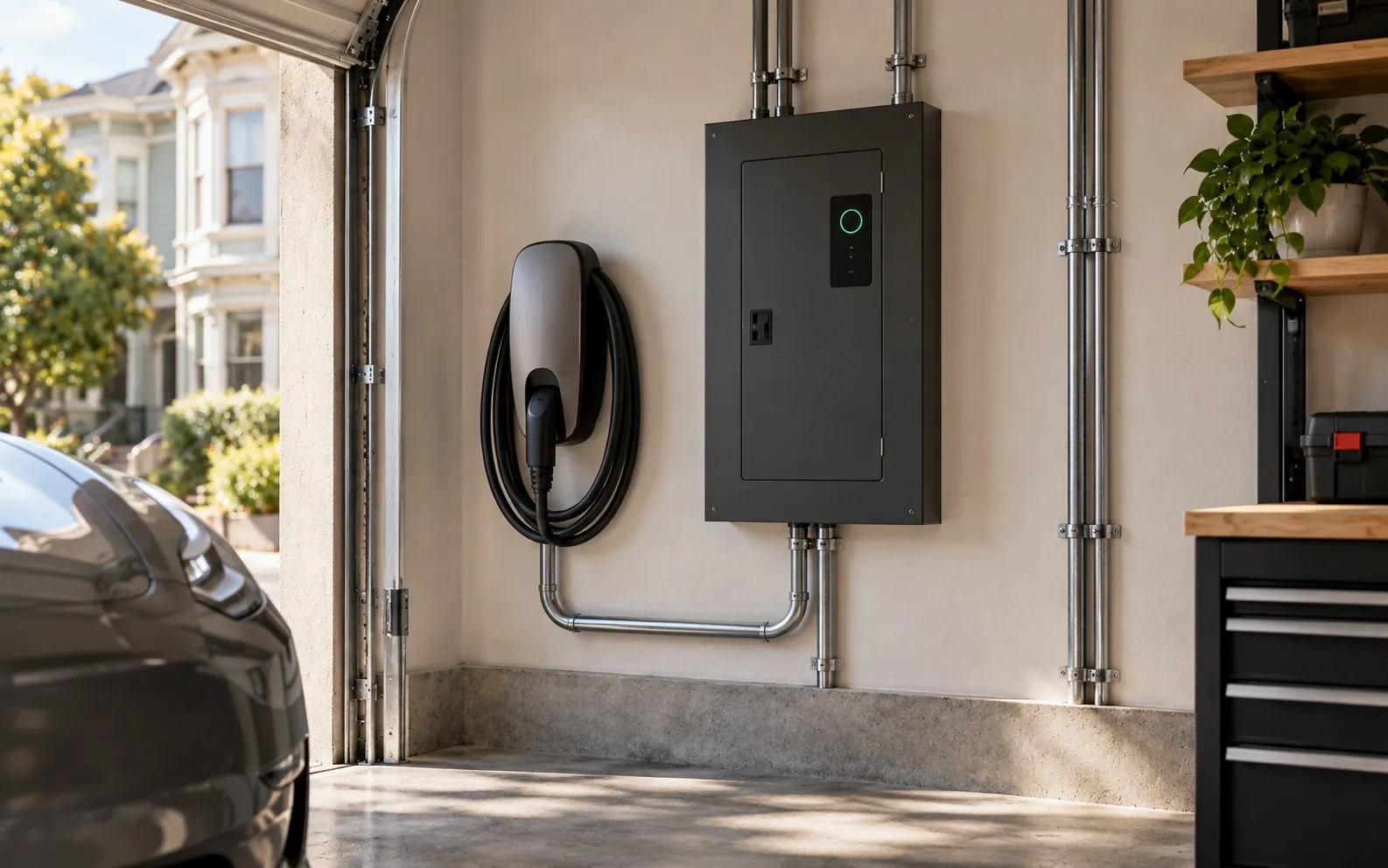
- Use the lower rates as a reason to plan, not to rush. If you are weighing an EV charger or heat pump, size the circuit and check the panel first. Our garage EV load calculation guide walks through it.
- Landlords: where tenants pay their own electricity, the charge sits on the tenant’s bill. In master-metered buildings it is a building cost.
The new rate structure quietly changed the math on electrification. The appliance is the same; what changed is that running it no longer carries a share of the fixed grid costs per kWh.
What comes next
Rates are not settled for long. PG&E’s 2027 General Rate Case (A.25-05-009) asks for average increases of about 3.5% per year from 2027 to 2030. The CPUC expects to decide in 2027, and consumer advocates note that several other rate requests are pending. Expect the Base Services Charge structure to stay, while the per-kWh numbers keep moving.
Questions we hear often
What is PG&E's Base Services Charge?
A fixed monthly charge on residential electric bills that started March 1, 2026. It recovers fixed grid costs and is $6.00, $12.08 or $24.15 per month depending on your income tier. Per-kWh prices were reduced to offset it.
Will the Base Services Charge raise my bill?
It depends on how much electricity you use. Higher-usage households, such as those with EVs or heat pumps, generally pay less overall. Very low-usage households may pay slightly more. Using the CPUC’s estimate, a Tier 3 household breaks even at roughly 500 kWh per month.
Do CleanPowerSF customers pay the Base Services Charge?
Yes. CleanPowerSF supplies the electricity, but PG&E still delivers it, and the Base Services Charge is part of PG&E’s delivery charges.
How do I qualify for the $6 or $12.08 tier?
Enroll in PG&E’s CARE program (Tier 1) or FERA program (Tier 2), which are based on household income and size. Residents of qualifying deed-restricted affordable housing can also be placed in Tier 2.
Is E-ELEC worth it if I have a heat pump or EV?
Often yes, especially if you can shift charging and water heating outside the 4 to 9 PM peak. Run PG&E’s rate comparison with your own usage data to confirm.
Sources and further reading
We checked the facts in this article against these primary sources. Rules, rates and incentives change, so confirm current details before you make a decision.
- PG&E: Restructured electric bill debuts in March 2026
- CPUC: Update on Base Services Charge implementation
- PG&E Electric Schedule E-ELEC (tariff)
- PG&E electric rate advisory, January 2026
- PG&E electric rate advisory, March 2026
- PG&E: 2027 General Rate Case
This article is general information for San Francisco readers, not legal, tax or engineering advice for a specific property.