
The 2025 California Electrical Code: What Changed in 2026
By the MC2 Electric team · Last reviewed October 14, 2026 · 4 min read
- Which code: the 2025 California Electrical Code (Title 24, Part 3), based on the 2023 NEC, applies to permits filed on or after January 1, 2026.
- Biggest homeowner changes: GFCI protection expands across the kitchen and to many 250-volt receptacles, island receptacles move onto the countertop, and surge protection stays required at the service.
- Biggest business changes: energy management systems, bidirectional EV charging and energy storage are now spelled out.
- About the “2026 NEC”: it is published, but California is not expected to enforce it before 2029, and residential timing is uncertain because of a statewide code pause.
Every three years California adopts a new set of building standards, and the electrical code follows the national model with state amendments. The current cycle took effect on January 1, 2026. If you are remodeling, building out a tenant space or planning electrification work in San Francisco, these are the changes that will show up on your plans and at inspection.
Which code applies in San Francisco
The 2025 California Electrical Code (CEC) is based on the 2023 National Electrical Code. It was published July 1, 2025 and became effective January 1, 2026. Generally, the code in effect when you apply for the permit governs the project. A job permitted in late 2025 may still be reviewed under the 2022 CEC.
A common source of confusion: the NFPA published the 2026 NEC in 2025, and some articles describe its changes as if they were already in force. In California, the 2026 NEC is expected to form the basis of the 2028 code, effective January 1, 2029. Separately, state legislation (AB 130, 2025) pauses most residential building standard updates until mid-2031. How that pause applies to residential electrical work is still being clarified, so confirm with the San Francisco Department of Building Inspection (DBI) for any specific project.
Changes you will notice at home
| Topic | What changed | What it means |
|---|---|---|
| GFCI in kitchens (210.8) | Protection extends to all kitchen receptacles, not only countertop ones, and to hard-wired ranges and wall ovens | Expect GFCI breakers or devices on appliance circuits in a kitchen remodel |
| GFCI on 250V circuits (210.8) | Dwelling-unit GFCI rules cover 125-volt through 250-volt receptacles in the listed locations | Dryer, range and some EV receptacles in garages and laundry areas need GFCI |
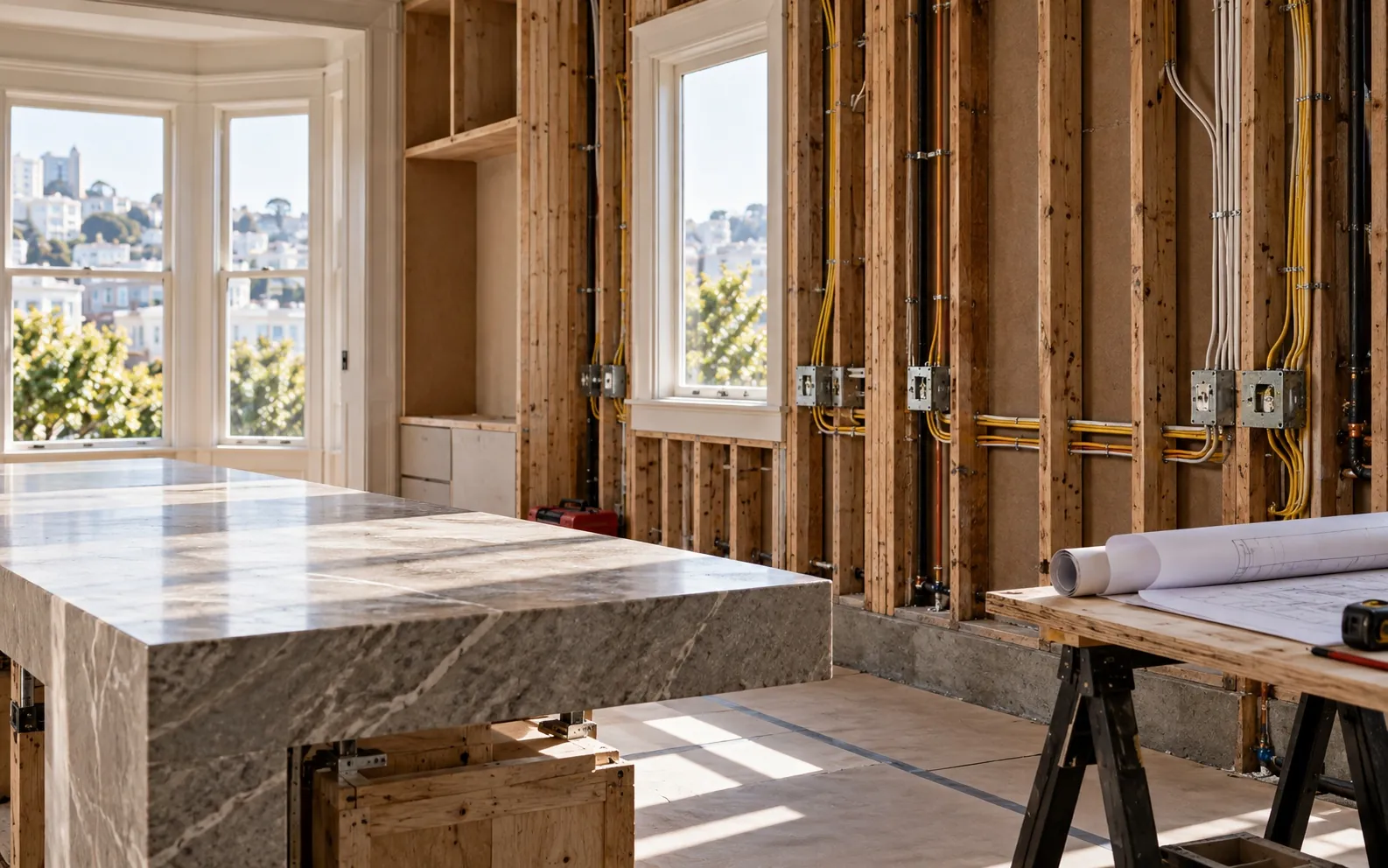
| Island receptacles (210.52) | Receptacles for islands and peninsulas go on or in the countertop, not under the overhang | Plan pop-up or countertop-mounted receptacles early with your designer |
| Surge protection (230.67) | Remains required for dwelling services, now with a 10kA minimum rating and expanded to more occupancy types | A surge protective device at the panel is standard on service work |
| Emergency disconnect (230.85) | Outdoor emergency disconnect for one- and two-family dwellings remains | Affects meter and main panel replacements |
One state-specific item to watch: California had a temporary exception from GFCI requirements for outdoor HVAC equipment, and it appears to have sunset in September 2026. Outdoor heat pump condensers may now need GFCI protection. Ask your electrician to confirm how DBI is applying it.

Changes for commercial buildings
- Energy management systems (220.70, 750.30, 705.13): when a listed system limits current, its setpoint can be used in the load calculation. That can make EV charging and electrification fit within existing service.
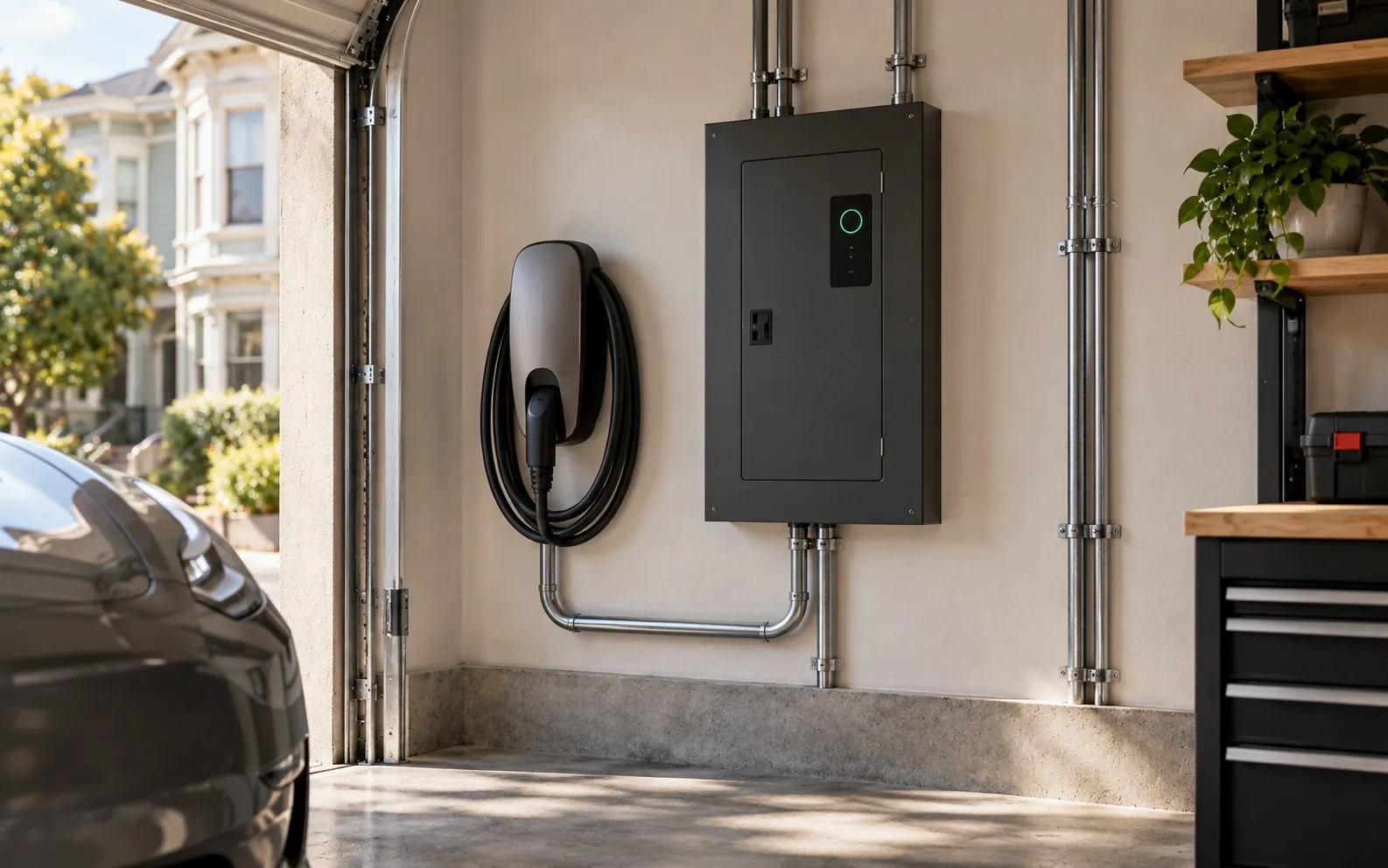
- EV charging (Article 625): clearer rules for bidirectional charging and interlocks, so vehicles can safely back-feed a building where equipment is listed for it.
- Energy storage (Article 706): updated requirements that reference current lithium-ion product standards.
- Panelboards: new barrier requirements to reduce accidental contact during service work.
- Networked life-safety equipment: new cybersecurity provisions for connected systems.
For the energy side of the same code cycle, see our Title 24 overview and the CALGreen EV requirements.

What it means for permits and inspections
- Confirm the code edition with your designer based on your permit application date.
- Put GFCI, AFCI and surge protection on the panel schedule. Inspectors check these first, and they affect breaker cost and panel space.
- Coordinate kitchen islands early. Countertop receptacle locations affect cabinetry and stone fabrication.
- Use energy management where it helps. A documented setpoint can avoid an upsized service. That matters given PG&E timelines.
- Keep records. Labeled panels and as-builts speed future inspections and insurance reviews. See why panel labeling matters.
Code changes rarely stop a project. Surprises at inspection do. The fix is boring: confirm the code edition at design and put the GFCI and receptacle locations on the drawings.
Questions we hear often
Which electrical code does San Francisco use in 2026?
The 2025 California Electrical Code, which is based on the 2023 National Electrical Code with California amendments. It applies to permits filed on or after January 1, 2026.
Does every kitchen receptacle need GFCI protection now?
Under the 2025 California Electrical Code, GFCI protection extends to all kitchen receptacles, not only those serving countertops, and to hard-wired ranges and wall ovens.
Is a whole-house surge protector required?
For dwelling services, yes. Section 230.67 requires a surge protective device when the service is installed or replaced, with a minimum 10kA rating in the current edition.
When will California adopt the 2026 NEC?
The 2026 NEC is expected to become the basis of the 2028 California Electrical Code, effective January 1, 2029. A statewide pause on residential building standard updates may delay residential changes further.
Does the new code apply to work permitted in 2025?
Generally the code in effect when you apply for the permit governs the project, so work permitted before January 1, 2026 is usually reviewed under the 2022 California Electrical Code. Confirm with DBI for your project.
Sources and further reading
We checked the facts in this article against these primary sources. Rules, rates and incentives change, so confirm current details before you make a decision.
- California Building Standards Commission: Codes
- California Building Standards Commission: 2027 Triennial Cycle
- SVABO summary of 2025 CEC changes (via City of Grass Valley)
- Lawrence Berkeley National Laboratory: NEC changes for electrification
- NAHB: California building code pause (AB 130)
This article is general information for San Francisco readers, not legal, tax or engineering advice for a specific property.