
E-Bike and Scooter Batteries: New SF Rules and Safe Habits
By the MC2 Electric team · Last reviewed October 14, 2026 · 4 min read
- Local law: San Francisco Fire Code Section 326 (Ordinance 122-26, passed June 2026) bans selling or delivering e-bikes, scooters or replacement batteries in SF unless they are certified to recognized safety standards.
- State law: SB 1271 requires e-bikes and their batteries sold in California from 2026 to be tested by an accredited lab.
- At home: most fires start during charging. Charge on a wall outlet, on a hard surface, away from exits, and not while you sleep.
- Home batteries such as solar storage are a different, regulated category, with listing, size and location limits.
Lithium-ion battery fires are now a regular part of fire department work in dense cities, and San Francisco is no exception. In December 2025 a fire at 50 Golden Gate Avenue displaced more than 130 residents. In 2026 the city changed the law. Here’s what the new rules cover, what the certification marks mean, and how to charge safely in an apartment.
San Francisco’s new battery law
The Board of Supervisors passed Ordinance 122-26 unanimously in June 2026, adding Section 326 to the San Francisco Fire Code. It prohibits selling, offering or delivering to any San Francisco address an e-mobility device or replacement battery unless the battery is certified to an accepted standard, and the certification mark must appear on the product or packaging.
- Covered: e-bikes, e-scooters and similar personal e-mobility devices, and their replacement batteries.
- Penalties: $500 for a first violation and $1,000 for repeat violations, plus possible action by the City Attorney.
- Who it targets: sellers and delivery, including online orders shipped to SF addresses. It does not confiscate devices residents already own.
What the certification marks mean
| Standard | Covers | Why it matters |
|---|---|---|
| UL 2849 | The complete e-bike electrical system: battery, charger and motor together | Tests the parts as a system, which is where many failures start |
| UL 2272 | Personal e-mobility devices such as scooters and hoverboards | The standard that ended the early hoverboard fire wave |
| UL 2271 | Batteries for light electric vehicles | Covers the battery pack itself, including replacements |
| EN 15194 | European standard for e-bikes | Accepted under the SF ordinance as an alternative |
Look for the mark of a nationally recognized testing laboratory (NRTL) on the product. A “meets UL standards” claim in a listing is not the same as certification.
At the state level, SB 1271 (2024) requires e-bikes and related batteries sold or rented in California from January 1, 2026 to be tested by an accredited laboratory to UL 2849 or EN 15194.

Safe charging in an apartment
- Use the charger that came with the battery, or a certified replacement from the manufacturer.
- Plug directly into a wall outlet. No power strips or extension cords, which can overheat under a long charge.
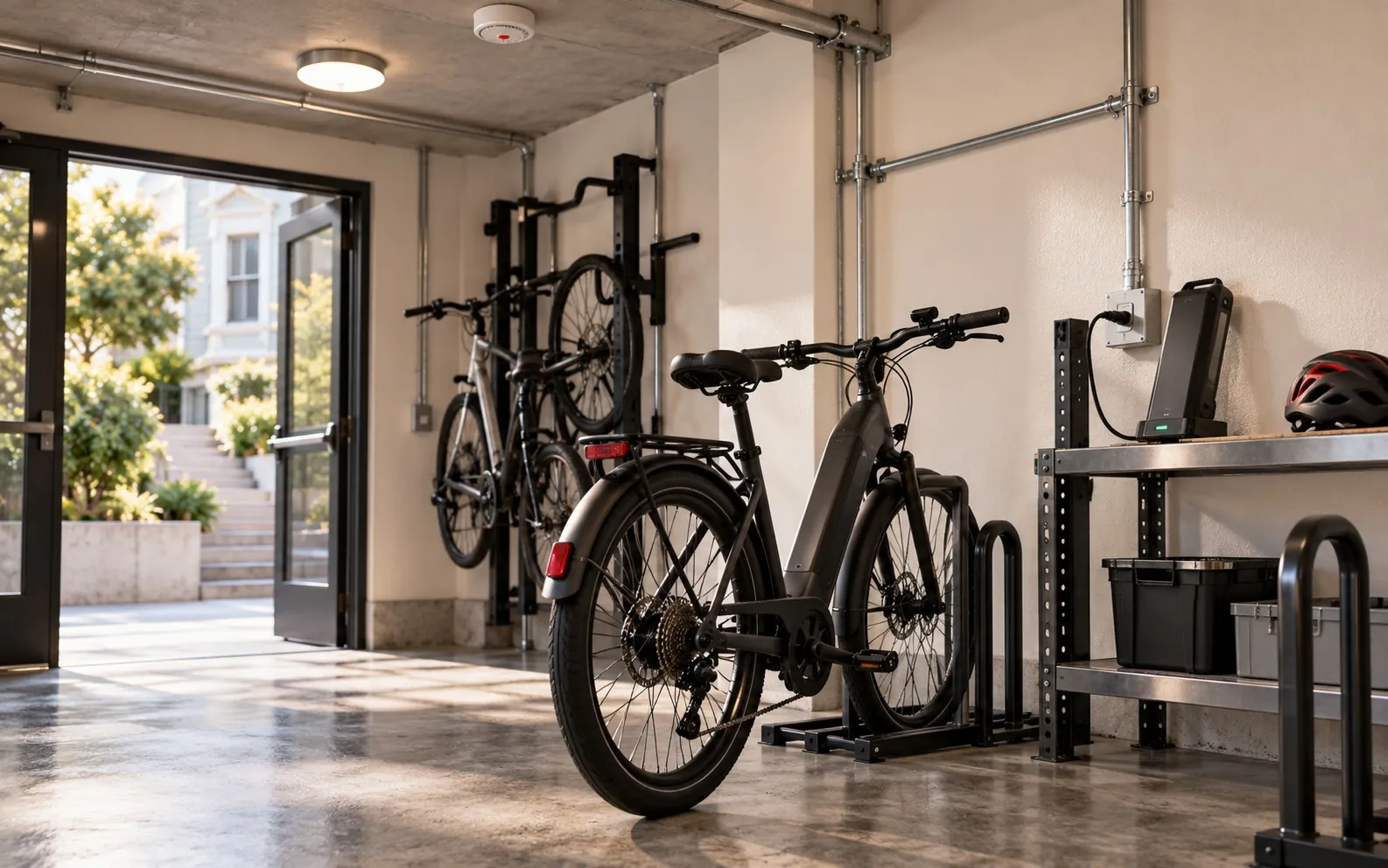
- Charge on a hard, non-combustible surface, away from beds, couches and the apartment’s exit path.
- Don’t charge unattended or overnight. Unplug when the battery is full.
- Let a hot battery cool before charging, especially after a long ride.
- Retire damaged batteries. Swelling, odor, hissing, leaks or heat are warning signs. Take the battery outside if it is safe to do so, call 911 if it smokes, and recycle it at a battery drop-off site, never in household trash.
- Have working smoke alarms in sleeping areas and near where devices are stored.
We are asked to add outlets in hallways and garages for e-bike charging more and more. The safest charging spot is a dedicated outlet, on a hard surface, where a fire cannot block the way out.
For landlords and building managers
- Make a policy and share it. Clear rules on storage and charging locations prevent hallway clutter and blocked exits.
- Consider a designated charging area. A ventilated room or garage area with dedicated outlets, no combustibles and good detection is safer than charging in units. Have an electrician confirm circuit capacity.
- Don’t let cords run through doors or hallways. Add properly located outlets instead.
- Review detection and alarm coverage in storage rooms and garages. See our fire alarm services for design and testing.
Home batteries are a different category
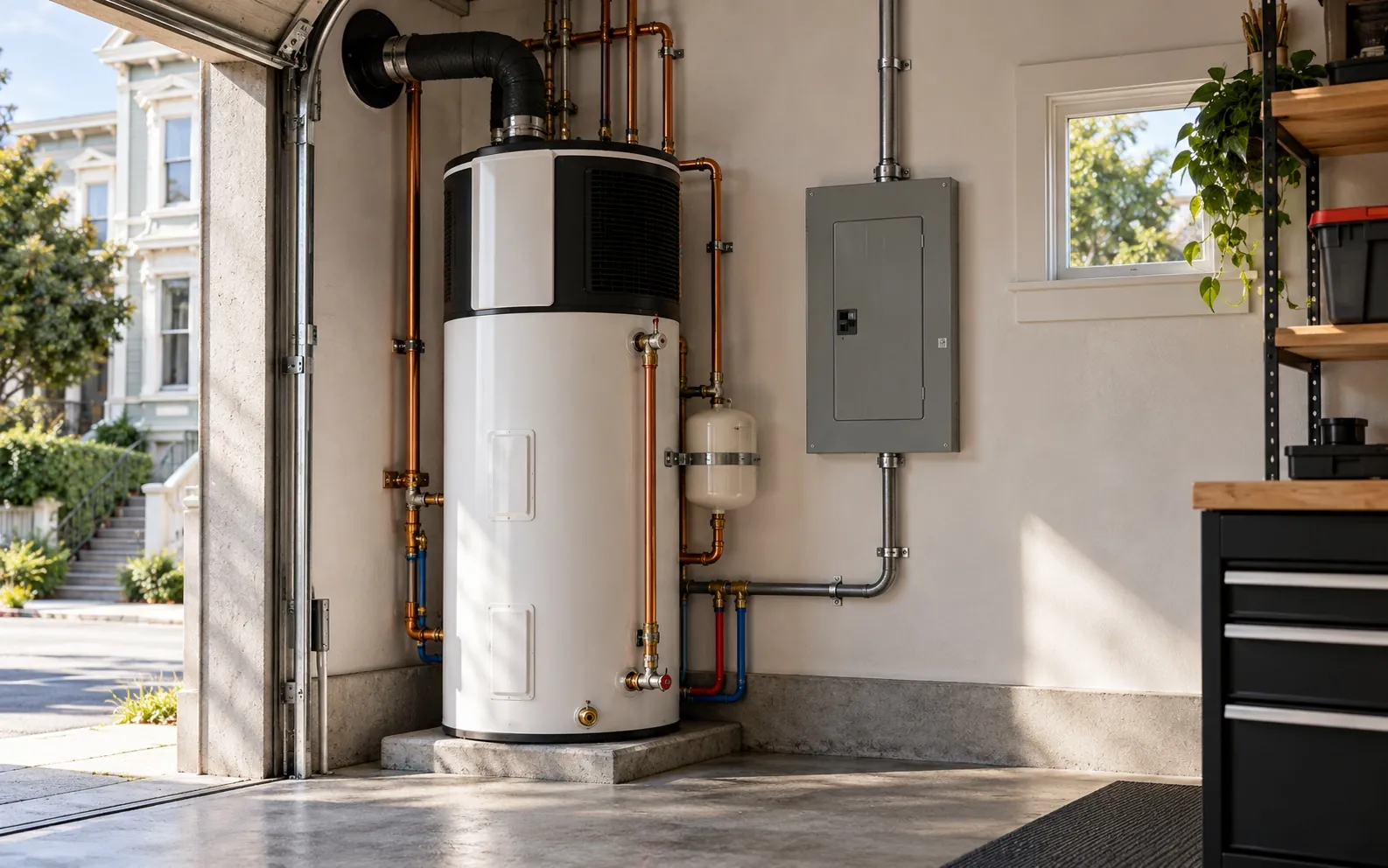
Whole-home batteries used with solar or for backup are regulated as energy storage systems (ESS). They must be listed to UL 9540 and installed with a permit under the California Residential Code and Fire Code. The residential code limits how much capacity can go in each location. Historically that meant 20 kWh per unit, 40 kWh in utility closets and basements, and 80 kWh in attached garages, on exterior walls or outdoors. Larger systems fall under the fire code and NFPA 855. Your installer should confirm current limits with DBI.
For sizing and circuit choices, see Battery Backup 101.
Questions we hear often
Can stores in San Francisco still sell uncertified e-bike batteries?
No. Under San Francisco Fire Code Section 326, adopted in 2026, selling, offering or delivering an e-mobility device or replacement battery to a San Francisco address requires certification to UL 2849, UL 2272, UL 2271, EN 15194 or another standard the Fire Department approves.
What is UL 2849?
A safety standard for the complete electrical system of an e-bike, including the battery, charger and motor, tested together by a recognized laboratory.
Is it safe to charge an e-bike inside my apartment?
It can be done more safely by using the original charger, plugging directly into a wall outlet, charging on a hard surface away from exits, and not charging unattended or overnight. Certified batteries are much less likely to fail.
Can a home battery be installed in my garage?
Usually yes, if it is listed to UL 9540, permitted and installed within the residential code’s capacity limits for that location. Larger systems have additional fire code requirements.
What should I do if my e-bike battery is swelling?
Stop using and charging it. If safe, move it outdoors away from anything combustible. Call 911 if it smokes or vents, and recycle it at a battery collection site rather than putting it in the trash.
Sources and further reading
We checked the facts in this article against these primary sources. Rules, rates and incentives change, so confirm current details before you make a decision.
- San Francisco Ordinance 122-26 (Fire Code Section 326)
- The San Francisco Standard: SF lithium-ion battery legislation
- Local News Matters: Scooter battery fire in San Francisco (October 2026)
- California Assembly analysis of SB 1271
This article is general information for San Francisco readers, not legal, tax or engineering advice for a specific property.