
EV Charging in Apartments and Condos: Rights and Wiring
By the MC2 Electric team · Last reviewed October 14, 2026 · 4 min read
- Renters: under Civil Code 1947.6, a landlord must approve a written request to install a charger at the tenant’s assigned space, with exceptions for small properties. The tenant usually pays.
- Condo owners: under Civil Code 4745, an HOA can’t prohibit or unreasonably restrict charging in an owner’s space. Since 2025 it can no longer require being named as an additional insured.
- New buildings: 2025 CALGreen, effective 2026, plus San Francisco’s own rules require EV-ready parking in new multifamily and commercial projects.
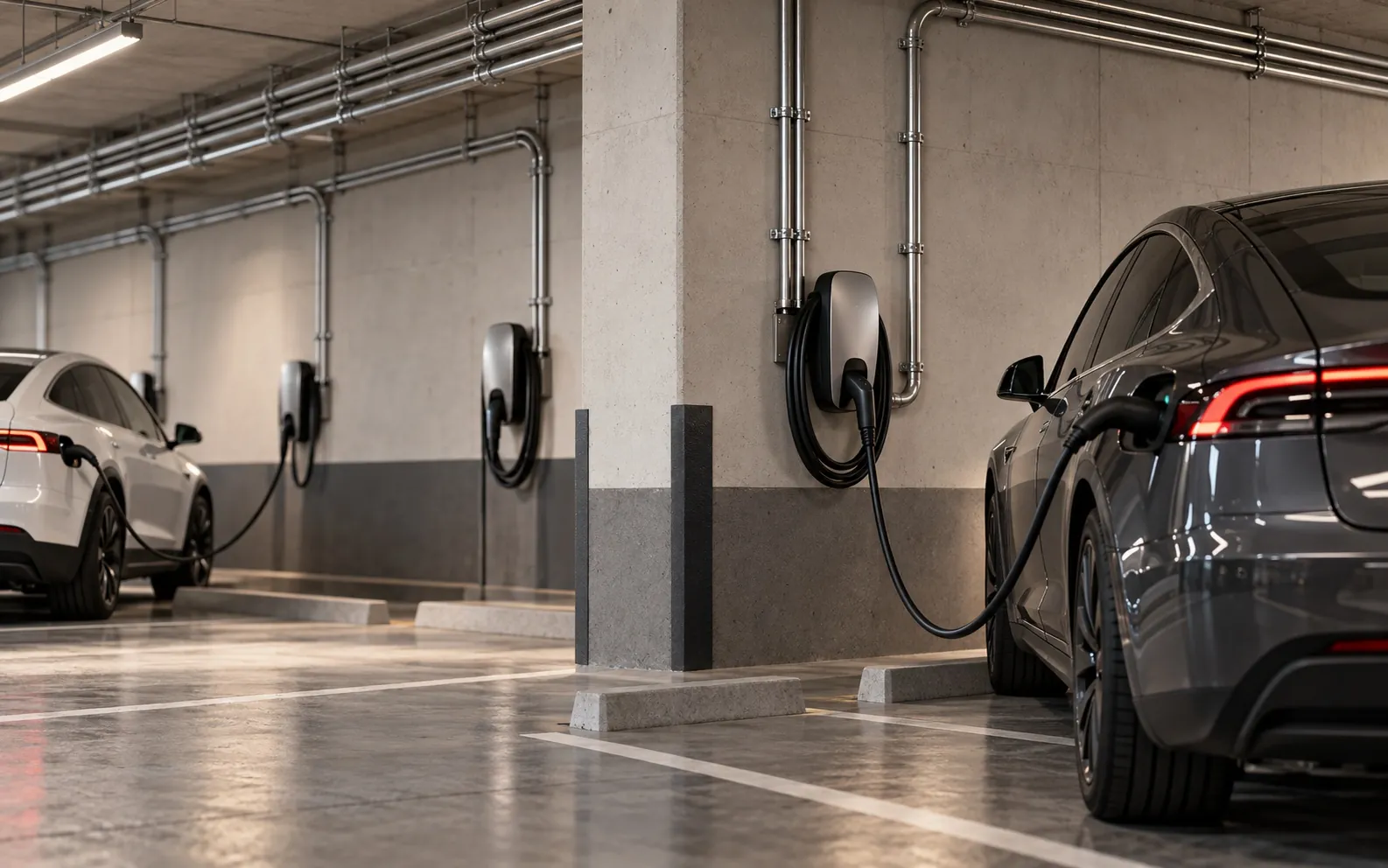
- The wiring: most garages don’t have spare capacity for every space at full power. Load management is usually the answer.
For many San Franciscans the hardest part of owning an EV isn’t the car. It’s the garage. Shared parking, old service panels and unclear rules make a simple charger complicated. California law gives renters and condo owners real rights, and the electrical side is more solvable than it looks.
Renters: the right to request a charger
Civil Code 1947.6, in place since 2015 and later expanded to rent-controlled units, requires a landlord to approve a tenant’s written request to install a charging station at the tenant’s parking space. Some conditions apply:
- Exemptions: properties with fewer than five parking spaces, and properties where at least 10% of spaces already have chargers.
- Cost: the tenant generally pays for installation, electricity and maintenance, under a written lease amendment.
- Installation: the work must meet code and be done by a licensed contractor. Insurance requirements are limited when the charger is safety-certified and installed by a licensed electrician.
Condo owners and HOAs
Civil Code 4745 makes HOA rules that prohibit or unreasonably restrict EV charging in an owner’s unit or exclusive-use space void. The association can still adopt reasonable rules on installation, metering and cost. Recent changes:
- SB 770 (2025) removed the requirement that owners name the HOA as an additional insured on their policy.
- SB 1267 (2026), which addresses agreements for chargers in common areas, passed the Legislature in August 2026. Check whether it has been signed before relying on it.
Boards that adopt a garage-wide plan early tend to avoid a series of one-off installations, each using up capacity.
New buildings: EV-ready by code
For projects permitted under the 2025 CALGreen code (effective January 1, 2026), multifamily parking generally requires low-power Level 2 receptacles for assigned spaces, plus Level 2 chargers at a share of common spaces. Automatic load management is allowed as long as each station receives a minimum level of power. San Francisco adds its own EV-readiness requirements through its Green Building Code.
Details, including nonresidential tables, are in our CALGreen EV guide.
The wiring reality in shared garages
| Approach | How it works | Best for |
|---|---|---|
| Level 1 (120V) at each space | Standard outlet, about 3 to 5 miles of range per hour | Low-mileage drivers, very limited capacity |
| Low-power Level 2 (20A to 24A) | 240V at modest current, about 12 to 18 miles per hour | Most daily commuting. This is the CALGreen approach. |
| Managed Level 2 network | Chargers share a fixed capacity and adjust power automatically | HOAs and apartments adding many spaces |
| Dedicated service for EV | Separate PG&E meter and service for charging | Large garages and fleets. May qualify for PG&E Rule 29 make-ready. |
Under the 2023 NEC-based code, chargers with adjustable or managed settings can be counted at their limited load (625.42), which is what makes shared capacity work. See our garage load calculation guide for single-family garages.

Ten cars do not need ten 48-amp chargers. They need a plan that gets every car to 80% by morning, and load management does that on the service most garages already have.
A practical path for tenants and boards
- Tenants: send a written request to the landlord that identifies your space and proposes a licensed contractor and a certified charger.
- Boards and owners: commission a garage capacity study before approving the first charger.
- Decide on metering: sub-metering, charger-based billing or a separate service, and write it into the rules.
- Design for the end state: install conduit and capacity for all spaces, then add chargers as owners request them.
- Check programs such as PG&E Rule 29, SFPUC EV Charge SF and income-qualified PG&E programs before you sign contracts.
Questions we hear often
Can my landlord refuse to let me install an EV charger?
At most California properties, no. Civil Code 1947.6 requires approval of a tenant’s written request, though properties with fewer than five parking spaces or with chargers at 10% of spaces are exempt. The tenant typically pays for installation and electricity.
Can my HOA block me from installing an EV charger?
An HOA can’t prohibit or unreasonably restrict charging in your unit or exclusive-use parking space under Civil Code 4745. It can set reasonable rules about installation, metering and costs.
Who pays for electricity and insurance for a condo EV charger?
Usually the owner who uses it pays for electricity, through sub-metering or a billing arrangement. Since SB 770 (2025), HOAs can no longer require owners to name the association as an additional insured.
How can a garage support many EV chargers without a service upgrade?
With load management. Chargers share a fixed amount of capacity and adjust their output automatically, and the electrical code allows the managed value to be used in load calculations.
Are there rebates for apartment and condo EV charging in 2026?
The federal 30C charger credit ended for equipment placed in service after June 30, 2026. Utility programs such as PG&E’s Rule 29 make-ready, and local programs, may still help. Check current availability.
Sources and further reading
We checked the facts in this article against these primary sources. Rules, rates and incentives change, so confirm current details before you make a decision.
- California Civil Code 1947.6 (renters)
- California Civil Code 4745 (common interest developments)
- SB 770 (2025) bill text
- 3C-REN: 2025 changes to CALGreen nonresidential EV charging
- SFPUC: San Francisco EV readiness code
This article is general information for San Francisco readers, not legal, tax or engineering advice for a specific property.