08Jun

San Francisco 2026 Title 24 Electric Ready Commercial Kitchens
The restaurant and hospitality industry in San Francisco is facing a monumental infrastructure shift. As part of California’s ongoing drive toward total building decarbonization, the newly updated 2025 Title 24 Building Energy Efficiency Standards will take full effect on January 1, 2026. For property managers, restaurant owners, and commercial developers, this means commercial kitchens can no longer rely solely on traditional gas lines without comprehensively planning for an electric future.
The updated code specifically establishes strict “electric-ready” requirements for commercial kitchens. Whether you are planning a ground-up hotel development or undertaking a major renovation of an existing restaurant space, understanding these electrical mandates now is essential to avoiding costly delays and future retrofitting hurdles.
The New Electric-Ready Mandate
The 2026 Title 24 update requires that commercial kitchens be constructed or renovated with the underlying electrical capacity to transition seamlessly to electric cooking and water heating equipment in the future.
The state’s primary goal is to ensure that buildings can smoothly adapt to California’s evolving energy landscape without requiring incredibly expensive infrastructure modifications later on. This means that even if a facility intends to use natural gas ranges on opening day, the electrical backbone must already be securely in place to support high-efficiency electric appliances.
- Massive Increases in EV-Ready Spaces: For new multifamily housing developments and hotels, a staggering 40% of all parking spaces must now be capable of supporting a low-power Level 2 EV charger.
- Mandatory Active Chargers: It is no longer enough to just run empty conduit. The 2026 update mandates that 10% of parking spaces in these facilities must be fully equipped with operational Level 2 EV chargers on day one.
- Unassigned Parking Standards: If a property utilizes unassigned parking, the code strictly dictates that one Level 2 EV-ready receptacle must be provided for every single dwelling unit.
Infrastructure Challenges for Property Owners
Preparing for commercial-grade electric cooking—such as heavy-duty induction ranges, electric broilers, and high-capacity commercial electric water heaters—requires massive amounts of dedicated power.
When preparing a commercial kitchen for the 2026 codes, property developers must account for:
- Increased Panel Amperage: Commercial electric appliances draw significant, continuous loads, often requiring dedicated 400-amp to 800-amp sub-panels strictly for the kitchen space.
- Dedicated Breaker Spaces: Main switchgear must feature permanently labeled breaker spaces explicitly reserved for future electric kitchen equipment.
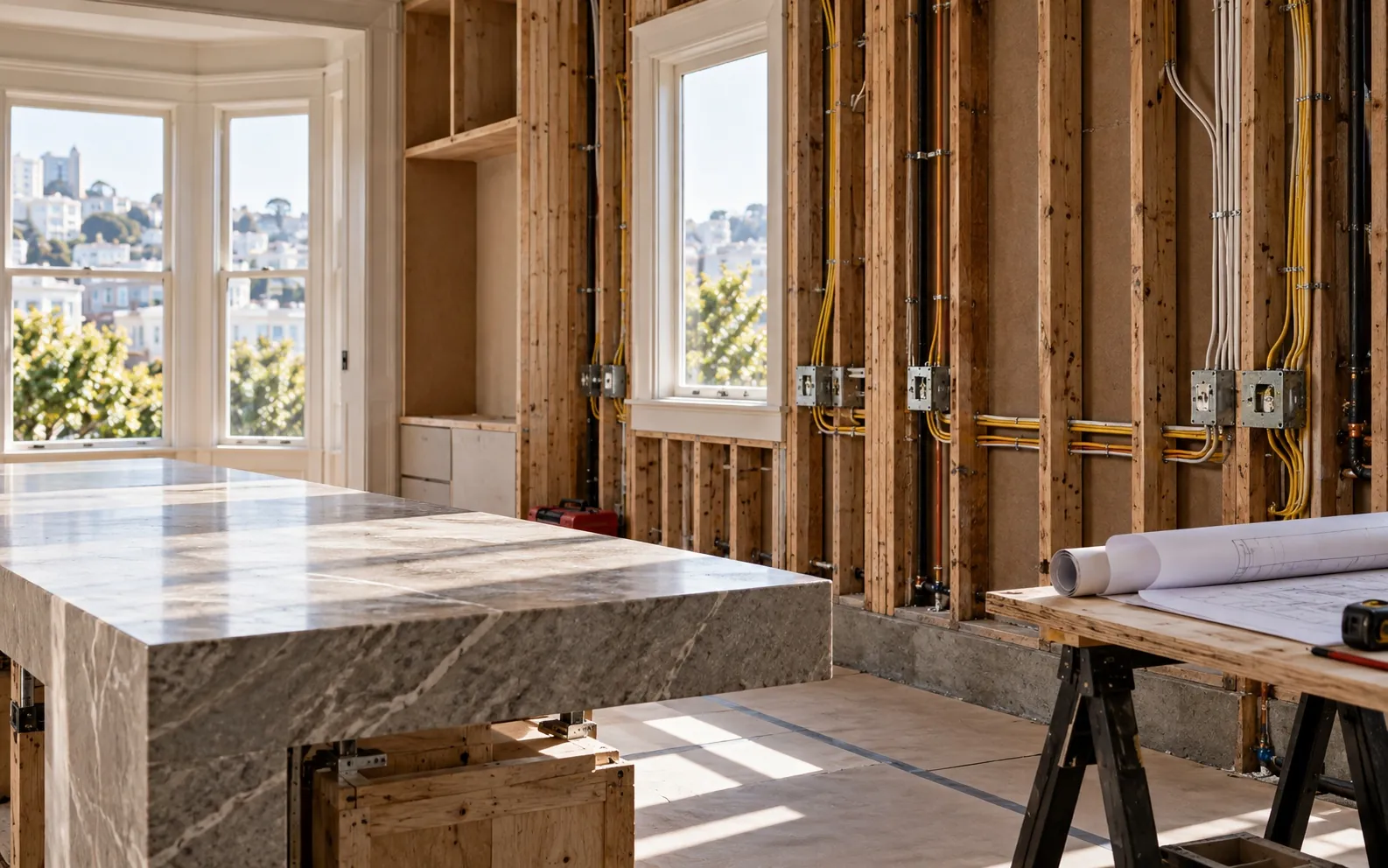
- Pre-Routed Conduit: Heavy-gauge wiring and appropriately sized conduits must be routed to the kitchen areas during the initial build to avoid tearing into walls or trenching concrete later.
Transitioning a commercial kitchen to electric power requires more than just swapping appliances. Under the 2026 Title 24 mandates, your building's electrical backbone must be meticulously engineered today to support massive, instantaneous power draws tomorrow without compromising operational reliability.
How Bay Area Facilities Must Prepare
San Francisco routinely enforces some of the strictest building and environmental codes in the nation. Waiting until the final phases of design to evaluate your electrical panels risks severe bottlenecks in permitting and project completion. Restaurant facilities and hotels must integrate these electric-ready provisions into their very first architectural and engineering drafts. Partnering early with a specialized commercial electrical contractor ensures your property achieves full compliance while maximizing the efficiency of your building’s footprint.

Next step
Ensure your San Francisco commercial kitchen meets the 2026 Title 24 electric-ready mandates by scheduling an expert infrastructure audit with MC2 Electric today.