08Jun

Beyond Savings: Navigating the CPUC’s 2026 "Total System Benefit" Metric in San Francisco
For decades, evaluating the energy efficiency of a commercial building in California was relatively straightforward: lower the kilowatt-hours and reduce peak demand. However, starting in 2026, the California Public Utilities Commission (CPUC) is fundamentally altering how energy efficiency goals are measured for investor-owned utilities like PG&E.
Under the recently adopted Rulemaking 25-04-010, the CPUC is replacing isolated peak demand metrics with the Total System Benefit (TSB) metric for the 2026–2037 cycle. For property managers, high-end residential developers, and commercial business owners in San Francisco, this regulatory shift means that building electrification and electrical infrastructure planning must evolve from basic energy reduction to comprehensive, lifecycle energy management.
What is the Total System Benefit (TSB) Metric?
The TSB metric moves away from measuring efficiency in simple kilowatt-hours or therms. Instead, it evaluates the holistic impact of an efficiency upgrade over its entire lifecycle. The CPUC will now look at:
- Lifecycle Energy Capacity: How well the building's electrical infrastructure sustains efficiency over decades, not just in the short term.
- Greenhouse Gas (GHG) Benefits: The overall reduction in carbon footprint tied to the building's grid interactions.
- Time-of-Use Optimization: How effectively a property can shift its electrical load away from carbon-intensive evening hours and align with California's midday solar surplus.
Why Traditional Upgrades May Fall Short
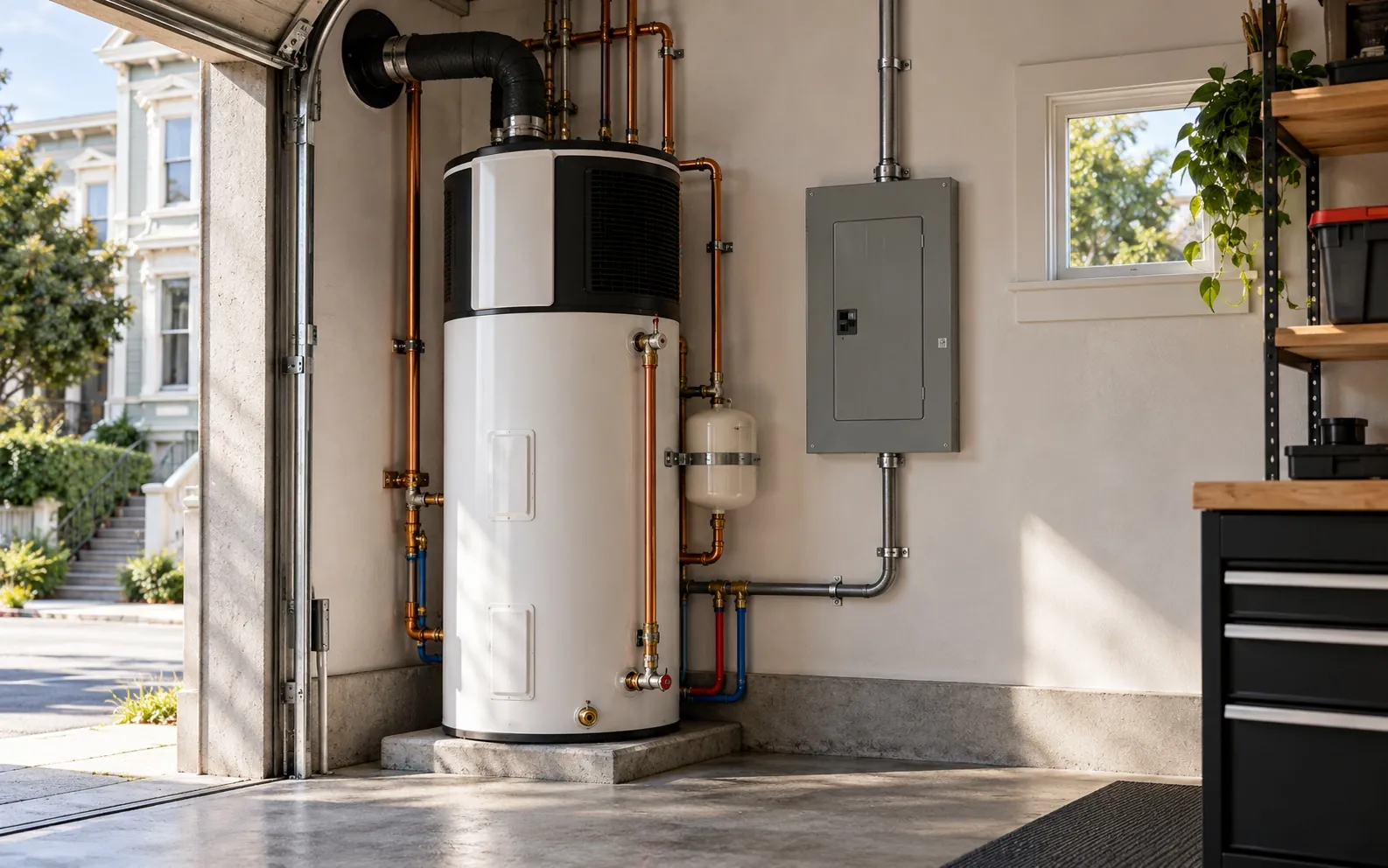
For Bay Area properties, achieving high TSB scores will require an electrical backbone capable of intelligent energy management. Older buildings in San Francisco frequently suffer from “ampacity bottlenecks” meaning their existing 100-amp or 200-amp service panels cannot handle concurrent loads from heat pumps, EV chargers, and advanced HVAC systems.
Simply swapping out gas appliances for electric ones without addressing the broader infrastructure will no longer suffice. Upgrades must now focus on:
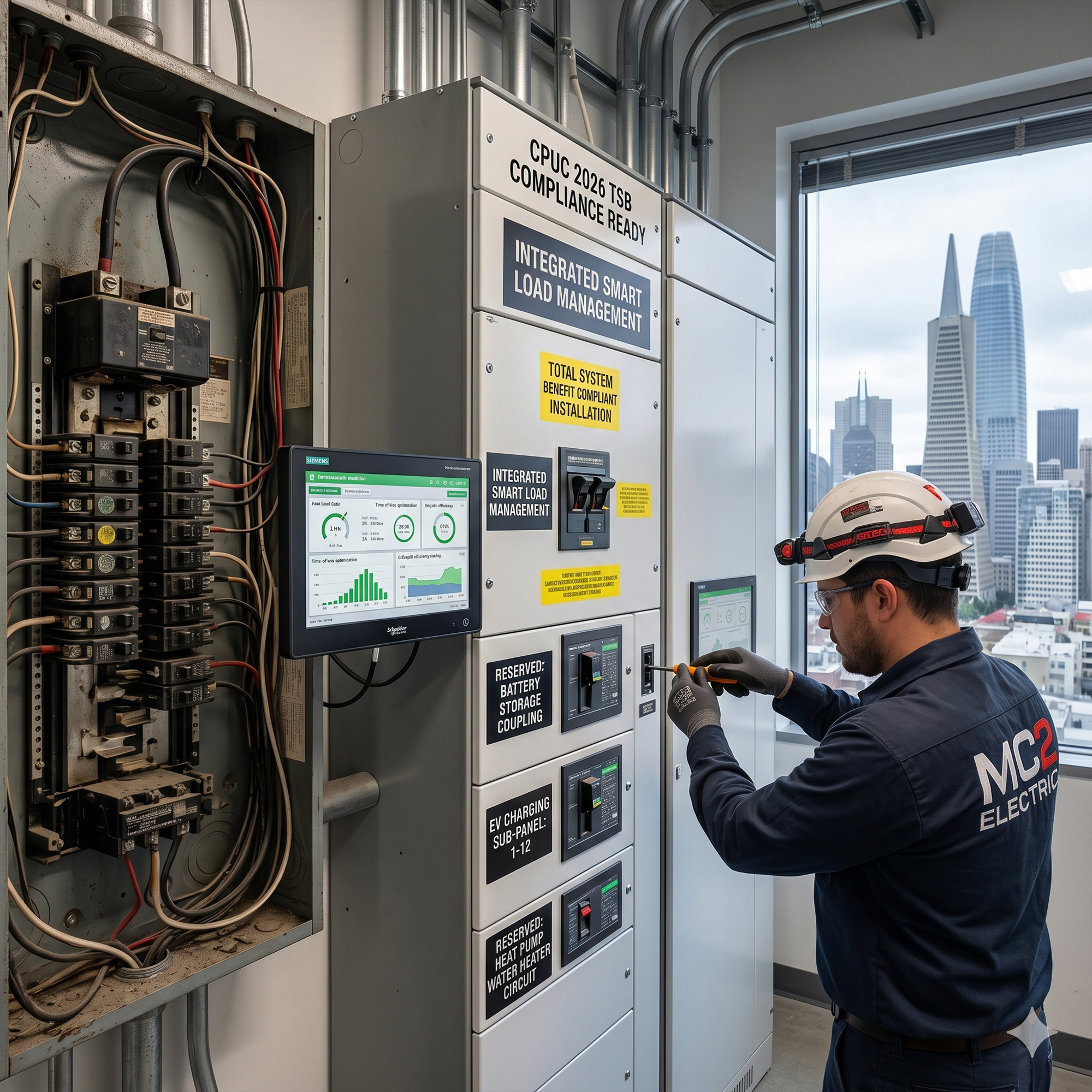
- Advanced Load Sharing: Installing automated load management systems (ALMS) to dynamically allocate power.
- Integrated Storage: Preparing main switchgear to seamlessly interact with local battery storage and building envelope thermal storage.
- Smarter Sub-metering: Equipping panels with real-time, granular monitoring to prove lifecycle energy compliance to utility auditors.
With the CPUC's shift to the Total System Benefit metric in 2026, California is no longer just asking commercial buildings to use less power it is demanding that they use power smarter. True compliance now means looking beyond the panel to integrate lifecycle energy management at the structural level.
The Financial and Compliance Impact on Bay Area Properties
Because utility companies will be held to these strict new TSB goals, they will heavily incentivize properties that adopt smart electrical architecture and penalize those that do not. Property managers who delay evaluating their electrical panels risk losing out on crucial utility-funded rebate programs designed to offset the cost of these heavy-duty upgrades. By modernizing your commercial electrical distribution now, you ensure that your asset remains competitive, compliant, and attractive to environmentally conscious tenants in the San Francisco market.

Next step
Ensure your San Francisco commercial property is compliant today by scheduling an expert electrical audit with the professionals at MC2 Electric before it's late.